
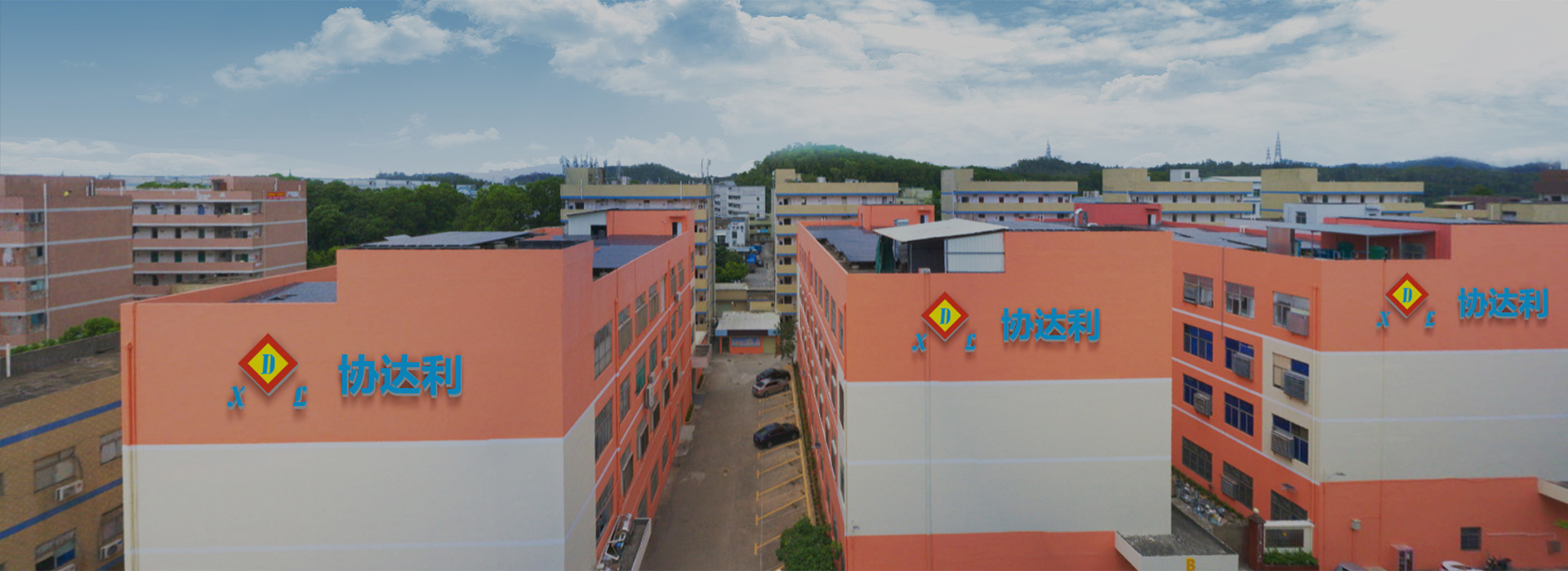
Why source custom PP packaging boxes from a China manufacturer?
Release time:
2026-11-18
Article overview
This guide is written for Singapore B2B procurement teams comparing polypropylene packaging suppliers. It covers landed-cost analysis, supplier evaluation criteria, a practical sourcing checklist, compliance requirements, and risk mitigation — all updated for 2026 market conditions.
Table of contents
- 1. What is a custom PP packaging box manufacturer in China?
- 2. Cost breakdown: China vs. regional alternatives for Singapore buyers
- 3. How to evaluate a reliable custom PP packaging box manufacturer in China
- 4. Step-by-step sourcing process for Singapore B2B buyers
- 5. Quality, compliance, and food-grade PP standards
- 6. Customisation capabilities: what China factories can actually deliver
- 7. Common risks and how to mitigate them
- 8. Frequently asked questions
What is a custom PP packaging box manufacturer in China?
A custom PP packaging box manufacturer China is a factory-based supplier that designs, moulds, and produces made-to-specification polypropylene boxes — including custom dimensions, printed branding, and industry-specific features — for export to global buyers. These manufacturers range from small OEM workshops to vertically integrated facilities with in-house tooling, printing, and quality control departments.
Polypropylene (PP) is a thermoplastic polymer valued for its chemical resistance, lightweight properties, and recyclability. Understanding its full range of polypropylene material properties helps buyers appreciate why it has become the preferred substrate for rigid packaging across electronics, food, cosmetics, and logistics sectors.
Why PP — and not PVC or PET?
Buyers frequently ask why PP has displaced PVC in many Singapore supply chains. The answer comes down to three factors. PP contains no chlorine, making it safer for food-contact applications and easier to dispose of under Singapore's Zero Waste Masterplan guidelines. It also tolerates a wider temperature range (-20°C to 120°C) than standard PET. And — a point procurement teams often overlook — PP resin pricing tends to be more stable than PET on the Asian spot market, reducing year-on-year cost volatility for repeat orders.
The scale advantage of China's packaging manufacturing cluster
China's Pearl River Delta and Yangtze River Delta manufacturing zones house the world's densest concentration of injection-moulded plastic packaging and corrugated PP box manufacturer capacity. This clustering means a single sourcing trip — physical or virtual — can cover tooling suppliers, resin traders, printing houses, and logistics agents within a 50 km radius. For a Singapore-based brand owner operating on lean inventory, that ecosystem translates directly into faster sampling, shorter lead times, and lower minimum order quantities than comparable suppliers in Malaysia or Vietnam.
Cost breakdown: China vs. regional alternatives for Singapore buyers
The core argument for sourcing from a wholesale packaging manufacturer China is not simply a lower unit price — it is a lower total landed cost in Singapore dollars. Many buyers focus exclusively on the ex-works (EXW) quote and are then surprised by freight, duties, and inspection fees. The table below presents a realistic 2026 comparison based on a standard order of 10,000 units of a custom-size rigid PP container (200mm × 150mm × 80mm, 1-colour print).
| Cost element | China supplier (FOB Shenzhen) | Malaysia supplier (FOB Johor) | Singapore local supplier |
|---|---|---|---|
| Unit EXW price (SGD) | S$0.38 | S$0.52 | S$0.74 |
| Sea freight to Singapore (per 10K units) | S$320 | S$110 | S$0 |
| Import duty (GST 9% on CIF) | ~S$360 | ~S$490 | ~S$670 |
| Third-party inspection (optional) | S$280 | S$220 | S$0 |
| Total landed cost (10K units) | S$4,760 | S$5,920 | S$8,070 |
| Effective per-unit landed cost | S$0.476 | S$0.592 | S$0.807 |
* Estimates based on 2026 LCL sea freight rates and Singapore GST of 9%. Actual costs vary by shipment weight, Incoterms, and inspection scope. Always request a landed-cost breakdown from your freight forwarder before signing a purchase order.
Why the gap narrows — but doesn't close — at lower volumes
At 2,000 units, the LCL freight cost per unit from China rises significantly, and the advantage over a Malaysia polypropylene packaging supplier Asia narrows to roughly 8–10%. Below 1,000 units, local or regional sourcing may actually be more cost-effective once sampling and tooling charges are factored in. This is not a reason to avoid Chinese suppliers at low volumes — it is a reason to negotiate consolidated shipments or join a group-buy arrangement through a sourcing agent.

How to evaluate a reliable custom PP packaging box manufacturer in China
Not every China packaging box exporter offering low prices operates a legitimate, audit-ready factory. Evaluating suppliers rigorously before committing to an order is what separates experienced procurement managers from those who end up managing quality disputes from 4,000 km away.
Five criteria that separate tier-1 suppliers from trading companies
- Factory ownership verification: Request the business licence (营业执照) and confirm the registered address matches the factory location on Google Maps or Baidu Maps. A reputable OEM packaging box China supplier will not hesitate to share these documents.
- In-house tooling capability: Suppliers that own their injection moulds can modify cavity dimensions in days rather than weeks. Ask directly: "Do you own the tooling, or do you outsource mould-making?"
- Quality management system: ISO 9001 certification is the baseline. For food-grade PP packaging destined for Singapore's F&B sector, also look for compliance with FDA 21 CFR or EU No. 10/2011 for food-contact plastics.
- Export track record: Ask for a copy of a recent Bill of Lading to Singapore or Southeast Asia. Legitimate China packaging box exporters handle Singaporean GST documentation routinely.
- Sample lead time: A factory with genuine idle capacity will produce a physical sample within 7–14 days. Longer than three weeks often indicates the supplier is a trading company subcontracting production.
Red flags spotted in real audits
In practice, the most common issue is not outright fraud — it is capability mismatch. A supplier may genuinely produce custom plastic box products but lack the colour-matching precision needed for branded packaging manufacturer Asia clients. One Singapore cosmetics brand discovered this only after receiving 5,000 units of transparent polypropylene packaging with a 15% colour deviation on the lid — well outside the ΔE ≤ 2.0 tolerance specified. The fix required a re-run, adding six weeks to the launch timeline. Verifying colour-matching equipment (spectrophotometer presence) during a factory audit would have caught this earlier.
"The cheapest supplier is rarely the most cost-effective one. Total cost of ownership — including re-work, delays, and air-freight rescue shipments — is what procurement teams should be optimising." — Packaging Industry Advisory Group, Southeast Asia Sourcing Report, 2025
Step-by-step sourcing process for Singapore B2B buyers
A structured sourcing process reduces the risk of cost surprises and quality failures. The following sequence reflects best practice for Singapore buyers engaging a custom PP packaging box manufacturer China for the first time.
- Define specifications precisely. Document wall thickness (typically 1.2–2.5 mm for rigid PP containers), outer dimensions in millimetres, print method (screen print, pad print, or in-mould label), and any food-grade or chemical-resistance requirements.
- Shortlist three to five suppliers. Use verified sourcing platforms or attend trade events such as Chinaplas. Cross-check business registration against China's National Enterprise Credit Information Publicity System.
- Issue a formal RFQ. Include your technical drawing or reference sample, target EXW price range, delivery port (Singapore), payment terms preference, and required certifications. This filters out suppliers who cannot meet your compliance baseline.
- Evaluate samples against spec. Test for dimensional accuracy (±0.3 mm tolerance is industry standard), surface finish, lid fit, and — if applicable — drop-test per ISTA 1A or ASTM D4169.
- Negotiate terms and place a trial order. A trial order of 1,000–3,000 units, even at a higher per-unit cost, allows you to audit the full production and logistics process before committing to bulk packaging manufacturer volumes.
- Arrange third-party pre-shipment inspection. SGS, Bureau Veritas, and Intertek all operate in China's main manufacturing hubs. Budget approximately S$280–S$350 per inspection day.
- Confirm freight and customs documentation. Ensure the supplier provides a correct HS code (commonly 3923.10 for plastic boxes), commercial invoice, packing list, and certificate of origin for Singapore customs clearance.
What to include in your purchase order to protect yourself
The purchase order is your primary legal protection. Beyond price and quantity, specify: approved sample reference number, acceptable AQL defect rate (typically AQL 2.5 for major defects), packaging and labelling requirements per the agreed packaging and labeling overview standards, and penalty clauses for late delivery. Many disputes arise not from bad faith but from ambiguous specifications — a detailed PO eliminates most of that ambiguity.
Quality, compliance, and food-grade PP standards
Singapore's import regulations for plastic packaging are aligned with international food-contact material standards, and buyers cannot assume that a low-cost supplier automatically meets these requirements.
What "food grade PP" actually means in a 2026 compliance context
Food grade PP packaging must use virgin resin (not recycled) with no restricted additives under Singapore Food Agency (SFA) guidelines. The resin grade should comply with either FDA 21 CFR §177.1520 or EU Regulation No. 10/2011 on plastic materials intended to contact food. When in doubt, request a migration test certificate from the supplier — legitimate factories supplying F&B clients will have these on file. Recycled-content PP is acceptable for non-food applications such as 3C electronics packaging and logistics outer boxes.
Environmental compliance relevant to Singapore buyers
Singapore's Extended Producer Responsibility (EPR) framework, which expanded in scope in 2026, requires brand owners to register packaging placed on the Singapore market. Choosing eco-friendly PP packaging solutions — including designs that meet recyclability criteria under the Singapore Packaging Agreement — can reduce your EPR levy obligations. Many injection molded plastic packaging manufacturers in China now offer mono-material PP designs (eliminating mixed-material laminates) specifically to support their Asian clients' EPR compliance. This is worth raising during supplier qualification discussions.
Customisation capabilities: what China factories can actually deliver
The range of customisation available from a well-equipped custom plastic box manufacturer in China is broader than many Singapore buyers expect — but it also has real limits that are worth understanding upfront.
Structural and dimensional customisation
Most mid-tier factories can accommodate custom size plastic box supplier requests down to 50mm × 50mm × 20mm for injection-moulded designs. Corrugated PP box manufacturer capabilities extend to large-format trays and dividers used in automotive and electronics assembly. Wall thickness, hinge type (integral living hinge vs. separate hinge assembly), snap-fit tolerance, and stackability are all specifiable. The limiting factor is tooling cost: a new injection mould for a medium-complexity PP box typically runs between US$1,500 and US$4,500 depending on cavity count and steel grade.
Branding and print customisation
Custom printed packaging boxes from Chinese factories can be produced via several methods, each with different cost and quality profiles. Screen printing suits 1–3 colour spot designs on flat surfaces. In-mould labelling (IML) delivers photographic-quality graphics with no label peel risk — popular for branded packaging manufacturer Asia clients in cosmetics and premium food. Hot stamping adds metallic finishes. For custom size plastic box supplier orders above 5,000 units, IML typically becomes cost-competitive with post-print processes while producing a superior finish. Below that threshold, screen print or pad print is more economical.
Why do so many buyers overlook IML? Partly because it requires the label to be loaded into the mould before injection, adding process complexity. But real-world testing shows IML-decorated PP containers withstand Singapore's humid climate significantly better than adhesive-label alternatives — a practical consideration for retail shelf life of 12–24 months.
Common risks and how to mitigate them
Sourcing from a custom PP packaging box manufacturer China is not risk-free. The buyers who do it successfully are those who understand the specific risk profile and address each vector systematically — not those who assume the lowest-price quote is a free lunch.
MOQ and cash-flow risk
High MOQ is the most frequently cited pain point among Singapore buyers. Many Chinese factories set MOQs at 5,000–10,000 units per SKU for injection-moulded boxes, which ties up working capital before a product has proven market fit. Mitigation options include: negotiating a shared-tooling arrangement (you co-own the mould and can run smaller batches), consolidating orders with a sourcing agent who batches multiple buyers' requirements, or selecting a supplier that offers rapid-tooling (3D-printed mould inserts) for pre-production runs of 500–1,000 units at higher per-unit cost.
Landed-cost opacity and currency risk
The second major concern is cost opacity — a quoted EXW price that balloons by 25–40% once freight, GST, and inspection are added. The solution is straightforward: always request a DDP (Delivered Duty Paid) Singapore quote alongside the EXW price, and use a licensed freight forwarder with Singapore customs expertise rather than leaving logistics entirely to the supplier. Currency risk (USD/SGD fluctuation) on orders exceeding S$20,000 may warrant a simple forward contract through your bank to lock in the exchange rate at PO issuance.
Of course, there are situations where even a well-vetted supplier encounters production disruptions — raw material shortages, factory-wide audits, or logistics bottlenecks. Building a 10–15% buffer stock and maintaining contact with a secondary supplier reduces your exposure to single-source risk without materially increasing your inventory carrying cost.
Frequently asked questions
Q: What is the typical MOQ when ordering from a custom PP packaging box manufacturer in China?
A: For injection-moulded rigid PP boxes, most Chinese manufacturers set an MOQ of 3,000–10,000 units per SKU. Corrugated PP sheet-cut boxes often start at 500 units. Negotiating a shared-tooling arrangement or working through a consolidating sourcing agent can reduce effective MOQ for Singapore buyers with smaller initial volumes.
Q: How long does sea freight from a China factory to Singapore take in 2026?
A: LCL (less-than-container-load) sea freight from Shenzhen or Shanghai to Singapore Port typically takes 7–12 transit days, plus 3–5 days for customs clearance and inland delivery. FCL (full container) is slightly faster at 5–8 days transit. Add 7–14 days for pre-shipment inspection if required.
Q: Can China manufacturers produce food-grade PP boxes that comply with Singapore Food Agency requirements?
A: Yes, provided the factory uses virgin PP resin compliant with FDA 21 CFR §177.1520 or EU No. 10/2011. Always request a migration test certificate and confirm the resin grade used. Reputable OEM packaging box China suppliers with F&B clients will have this documentation readily available.
Q: Is it possible to get custom printed PP boxes with a Singaporean brand's logo from a China factory?
A: Yes. Options include screen printing (1–3 colours, cost-effective at lower volumes), in-mould labelling (photographic quality, recommended above 5,000 units), pad printing, and hot stamping for metallic finishes. Provide print-ready artwork in AI or EPS format with Pantone colour references to ensure accurate colour reproduction.
Q: How do I protect my tooling investment if I switch suppliers later?
A: Include a clause in your purchase order and tooling agreement explicitly stating that the mould is your property, stored at the factory's premises at your risk, and must be returned or transferred to a nominated party upon request. Pay a separate line-item invoice for the mould (not bundled into unit price) to establish clear ownership. This is standard practice among experienced bulk packaging manufacturer clients sourcing from China.
Conclusion
The case for sourcing from a custom PP packaging box manufacturer China is strongest when Singapore buyers take a total-landed-cost view rather than comparing ex-works prices in isolation. At volumes above 3,000 units per SKU, well-qualified Chinese factories consistently deliver a 30–40% cost advantage over regional alternatives — even after freight, GST, and inspection fees are accounted for. The risks are real but manageable: rigorous supplier qualification, a detailed purchase order, pre-shipment inspection, and a secondary supplier on standby address the vast majority of failure modes.
What separates buyers who succeed consistently from those who get burned once and retreat to local sourcing? It is rarely luck. It is a repeatable process — the kind outlined in this guide — applied to every new supplier engagement. With China's packaging manufacturing ecosystem continuing to invest in automation and eco-friendly PP packaging solutions through 2026 and beyond, the opportunity for Singapore B2B buyers remains as strong as it has ever been.
Previous
Follow US


SHENZHEN XIEDALI PRINTING & PACKAGING PRODUCTS CO., LTD
Building 11-13, Area 2, Dagang Industrial Zone, Pinghu Town, Longgang District, Shenzhen City, Guangdong Province
13480820086(Chief Xie)13717090889 (Miss Yang)
3002815199
©COPYRIGHT 2023 Xedali All Rights Reserved